Skip to content
What Is the Best Treatment for Back Pain? A Physiotherapist’s Answer

What Is the Best Treatment for Back Pain? A Physiotherapist’s Answer

Back Pain Mobility Muscle Strain

There isn’t one single “best” treatment for back pain. There is, however, a best process for treating back pain.

The short version: identify the driver, calm the system, restore capacity, then build tolerance to real-life loads. Anything else is guessing dressed up as healthcare.

Back pain is not one condition, so we don’t treat it like one

“Back pain” is a symptom, not a diagnosis.

When someone books in saying “my back’s cooked,” it can include these scenarios:

  • A 38-year-old office worker with a sore middle back between the shoulder blades after weeks of laptop hunching, relieved by moving but aggravated by long meetings.
  • A 46-year-old warehouse worker with lower back pain after a sudden spike in lifting volume, worse the next morning, stiff and guarded, but no leg symptoms.
  • A 29-year-old runner with a deep ache around L4–L5 that flares after hill repeats and long drives, and improves with walking.
  • A 55-year-old parent who gets “catching” pain when bending to load the dishwasher, fearful of “slipping a disc,” now moving like they’re made of glass.

Those are not the same problem, even if they all type the same words into Google.

If you’re hunting for the “best treatment,” your first job is to stop lumping these together.

The first fork in the road: is this a normal back pain presentation?

Most back pain is mechanically driven and settles with sensible care.

If someone has progressive weakness, saddle numbness, or bowel/bladder changes, it’s not a “try these stretches” situation. It’s an immediate medical assessment. No delay.

For everything else, we need structure.

The “best” early treatment is movement, not rest

Bed rest is still one of the most stubborn pieces of bad advice in musculoskeletal care.

Here’s the scenario I we see constantly: someone tweaks their lower back lifting a toddler into a car seat. They rest for two days “to let it heal.” By day three they’re stiff, hypersensitive, sleeping poorly, and now every bend feels dangerous.

In contrast, the person who keeps moving (carefully) usually improves faster.

So what does “move” actually mean?

It means you choose motions that reduce threat and maintain function:

  • – Short, frequent walks: 5–10 minutes, several times a day.
  • – Gentle lumbar range: knee-to-chest or pelvic tilts if tolerated.
  • – Avoiding long static positions: set a timer, stand every 30–45 minutes.

One sentence version: motion is medicine, as long as you do it properly.

If you’re stuck in a cycle of resting, bracing, and flaring, that’s not your back “failing.” It’s your system getting more sensitive and less conditioned.

Heat and ice are fine, but let’s not pretend they’re a plan

Use heat for stiffness. Use ice if it feels good for sharp flare-ups.

Just don’t confuse symptom relief with a solution.

If heat helps you walk and move more comfortably, great. If ice helps you settle enough to sleep, also great.

But if your entire strategy is a heat pack and “waiting it out,” don’t be surprised when this keeps coming back.

Physiotherapy for back pain is the cornerstone

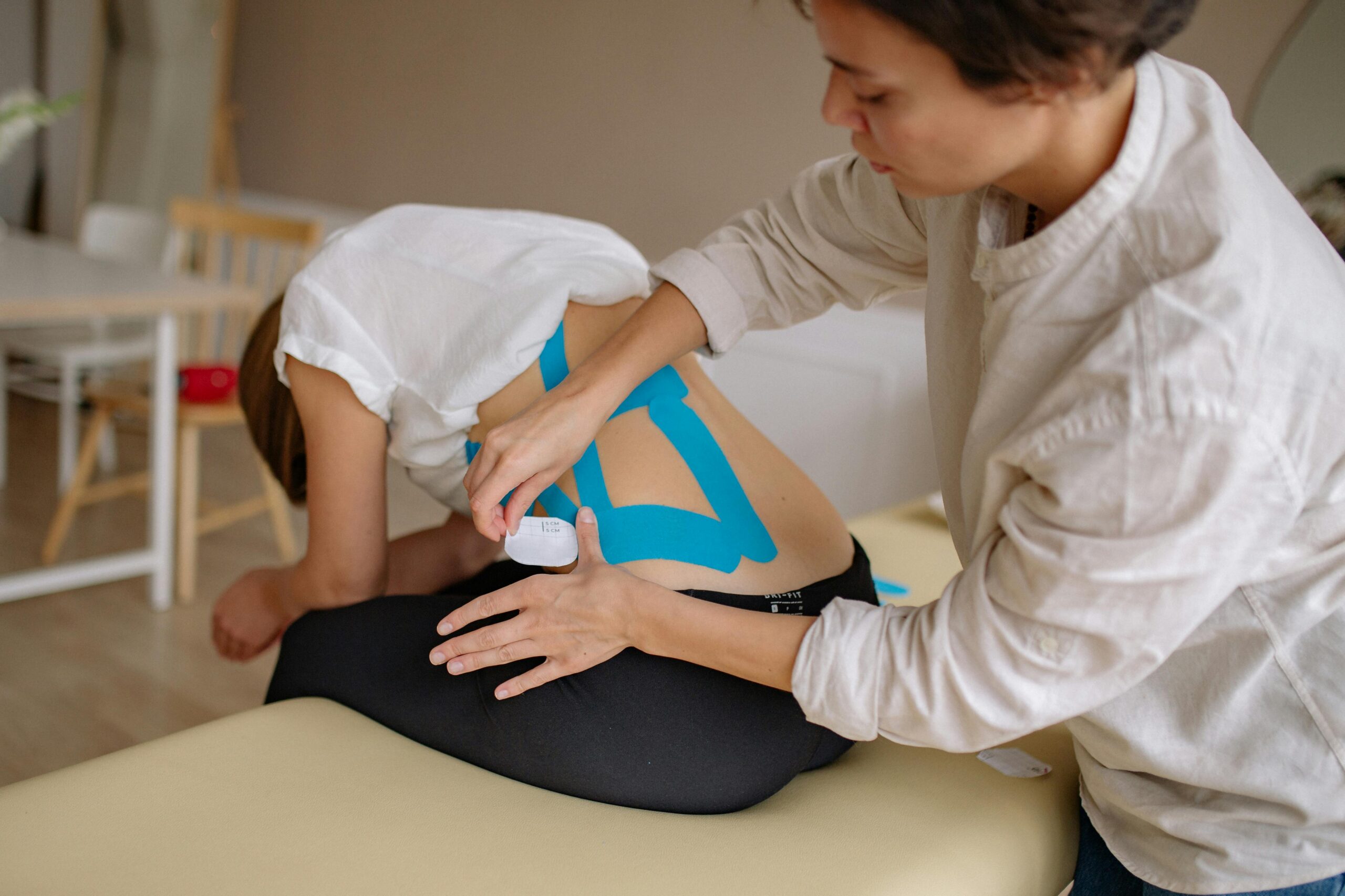
The best treatment for most back pain is physiotherapy that combines assessment, targeted exercise, and load management.

Not passive treatment on its own.

Not generic “core” work.

Not a scan and a shrug.

Good physiotherapy earns its value in three ways.

1. It identifies the driver, not just the location

A sore middle back might be thoracic stiffness plus poor rib mobility, not “tight muscles.”

Lower back pain might be a hip-dominant lifting strategy that overloads lumbar tissues when fatigue sets in.

Example: the gym-goer who deadlifts fine early in the session, but after accessories their form shifts, their brace disappears, and the lumbar spine takes the hit. The fix is not “avoid deadlifts forever.” It’s capacity, technique under fatigue, and graded exposure.

1. It gives you a progression that matches your life

One-size programs fail because people don’t live one-size lives.

A nurse doing 12-hour shifts needs a plan that accounts for:

  • – repeated bending at awkward angles,
  • – time pressure,
  • – sleep disruption.

A tradie needs:

  • – lifting tolerance,
  • – rotation control,
  • – realistic strategies for “I can’t take two weeks off.”

3. It reduces fear and restores confidence

Fear changes movement.

People with back pain often brace, avoid bending, and move in slow rigid blocks. That pattern amplifies load in the wrong places and keeps the system irritable.

A good physio doesn’t just “fix tissue.” They help you move normally again, and that’s often the difference between recovery and recurrence.

Exercise: what works depends on the pattern, not the trend

Let’s get specific.

Scenario A: acute lower back pain after lifting (no leg symptoms)

Early goals: reduce sensitivity, keep function.

A starting point might be:

  • – 5–10 minute walks, 3–5 times/day
  • – hip hinge drill with dowel to reintroduce bending
  • – isometric holds: e.g., side plank (short lever) 3 x 10–20 seconds
  • – glute bridges 2–3 sets, controlled tempo

Then progress toward:

  • – goblet squat patterning
  • – Romanian deadlift pattern (light)
  • – loaded carries (farmer carries) for spinal endurance

Scenario B: sore middle back from desk work

If your upper back feels like it’s “stuck” by 3pm, stretching your neck is rarely the main fix.

You’re usually dealing with:

  • – reduced thoracic extension,
  • – rib cage stiffness,
  • – scapular endurance deficits.

A practical progression:

  • – thoracic extension over a foam roller (targeted, 1–2 minutes)
  • – wall slides or serratus-focused reaches
  • – rowing variations, higher rep endurance
  • – “movement snacks” across the day: 60 seconds every hour beats 10 minutes once

Scenario C: recurring back pain with sitting and driving

If sitting flares you, the answer isn’t “sit perfectly.”

It’s:

  • – vary positions (seat tilt, lumbar support adjustment),
  • – standing breaks,
  • – build tolerance with gradual exposure.

We’ve seen people transform their symptoms by doing one boring thing consistently: standing up every 30 minutes and walking for two minutes. It’s not glamorous. It works.


Manual therapy can help, but it’s not the hero

Hands-on work can reduce pain and improve mobility. We use it.

Manual therapy is an adjunct, not a destination.

If someone relies on massage, manipulation, or dry needling every time they flare, their back hasn’t become resilient. They’ve just learned a dependency pattern.

Manual therapy is useful when it:

  • – reduces threat and muscle guarding,
  • – creates a window where movement is easier,
  • – helps someone re-engage with exercise.

If it isn’t followed by a plan to build capacity, it’s mostly theatre.

Imaging: useful sometimes, overused often

We’re not anti-scan. We’re anti-meaningless scans.

Someone gets an MRI for non-specific lower back pain and finds “disc bulge” or “degeneration.” They panic. They stop bending. Symptoms worsen.

Disc bulges and degenerative changes are common findings, especially as we age, and they do not reliably predict pain.

Imaging is more helpful when:

  • – symptoms are severe and persistent despite good care,
  • – there are neurological signs (worsening weakness, significant numbness),
  • – trauma is involved,
  • – systemic red flags exist.

A scan should clarify decisions, not fuel fear.

Preventing recurrence: build a back that can do back things

The back’s job is to bend, load, rotate, and tolerate life.

So prevention is not “never lift.” It is lift better, and gradually lift more.

Practical prevention looks like:

  • – spinal endurance (carries, hinges, split squats),
  • – hip strength (glute med and max capacity),
  • – thoracic mobility for people with middle back stiffness,
  • – sensible weekly load progression.

If you only stretch when you’re sore and do nothing when you feel good, you will repeat the cycle.

The best treatment is a personalised, progressive plan

If your back pain has lasted more than a couple of weeks, recurs frequently, or is limiting work, training, or sleep, you need more than internet advice.

You need someone to assess:

  • – what movements trigger it,
  • – what positions relieve it,
  • – what loads you’re under,
  • – and what capacities you’re missing.

That’s the difference between symptom control and real change.

Book in with City South Physio and get a back pain plan you can trust

If you’re dealing with lower back pain, physiotherapy for back pain, or a persistent sore middle back, we can help you sort out what’s driving it and build a plan that fits your actual life.

At City South Physio, we focus on evidence-based assessment, hands-on care when it’s useful, and targeted exercise that restores confidence and function.

If you’re ready to stop guessing, book an appointment and let’s get your back moving properly again.